Glass and light
Exit Pupil and Low Light Calculator
Quick answer
Exit pupil is objective diameter divided by magnification. A 50 mm objective at 10x gives 5 mm, which roughly matches a middle-aged pupil at last light. An exit pupil smaller than your own pupil is a dim image, and one larger than your pupil is glass you paid for and cannot use.
Exit pupil is the diameter of the cone of light leaving the eyepiece. It is the single most useful number for predicting how an optic will behave as the light goes, and it costs nothing to work out: divide the objective diameter by the magnification.
It matters because your own pupil has a diameter too. In daylight a human pupil closes to 2 or 3 mm, so almost any optic delivers more light than the eye can accept and exit pupil is irrelevant. In near darkness a young pupil opens to about 7 mm and a sixty year old pupil to about 5 mm. At that point the smaller of the two diameters is the one that limits you.
The practical consequence surprises people: turning magnification down does more for low light performance than buying a bigger objective, and it is free.
Exit pupil and low light calculator
Exit pupil
The formula
exit pupil = objective / magnification twilight factor = sqrt(objective x magnification) relative brightness = exit pupil squared
Optics that suit your light conditions
Top matches update when you change your numbers.

Vortex Diamondback HD 8x42 Binoculars
$239.00The same binocular at eight power, which gives a 5.25 mm exit pupil, a wider field and an image that is noticeably steadier in the hand. Most people should buy this rather than the 10x.
Best for: handheld glassing at dawn and dusk
Check price on Amazon Vortex Diamondback HD 10x42 Binoculars
$240.00The default recommendation in this category for a decade, and the reason is that nothing at the price has better glass with a transferable lifetime warranty behind it.
Best for: general hunting and glassing
Check price on Amazon
Vortex Diamondback HD 15x56 Binoculars
$369.00A tripod binocular, and a genuine alternative to a spotting scope for long glassing sessions: two eyes are far less tiring than one over an hour.
Best for: long sitting glassing sessions from a tripod
Check price on Amazon
Vortex Diamondback 3.5-10x50 Riflescope, Dead-Hold BDC Reticle
$299.00 Full specificationsThe 50 mm objective buys a 5 mm exit pupil at 10x, which is about as much as a middle-aged eye can actually use, and it does it without needing high rings on most rifles.
Best for: low light hunting without going to a 56 mm objective
Check price on Amazon
Vortex Venom 5-25x56 First Focal Plane Riflescope, EBR-7C MOA
$499.00 Full specificationsA 56 mm objective at 25x still gives a 2.24 mm exit pupil, which is what lets a high magnification scope stay usable as the light goes rather than becoming a dark tunnel.
Best for: long range shooting into dusk
Check price on Amazon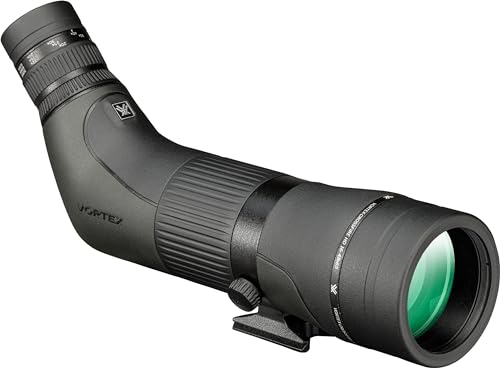
Vortex Crossfire HD 16-48x65 Angled Spotting Scope
$249.00The entry point into a spotting scope worth owning. An angled body is easier to share and easier to use from a low tripod, which is most of what a spotter does on a range.
Best for: a first spotting scope for range work
Check price on Amazon
Vortex Diamondback HD 20-60x85 Angled Spotting Scope
$499.00The largest objective here, and the one that stays usable longest into the evening. At 85 mm the glass quality starts to matter more than the aperture, which is why this is the HD line.
Best for: glassing at last light and judging animals at distance
Check price on Amazon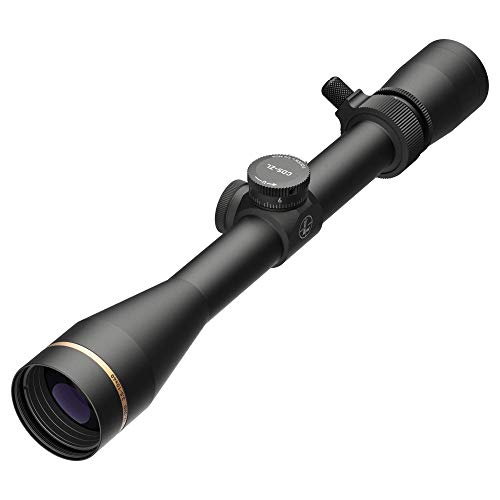
Leupold VX-3HD 3.5-10x40 CDS-ZL Duplex Riflescope
$599.99 Full specificationsA genuine step up in low light performance over the VX-Freedom at the same objective size, which is the half hour either side of legal light where most hunting is decided.
Best for: first and last light hunting where the extra glass earns its money
Check price on AmazonWhat common combinations actually give you
Every figure here is exact arithmetic from two numbers printed on the box. None of them says anything about glass quality or coatings, which is the other half of the story.
An 8x42 binocular gives a 5.25 mm exit pupil while a 20-60x85 spotting scope at 60x gives only 1.42 mm, which is why the spotter goes dark long before the binocular does.
Sourced figure
| Configuration | Exit pupil | Twilight factor | Relative brightness |
|---|---|---|---|
| 42 mm at 8x | 5.25 mm | 18.3 | 27.6 |
| 42 mm at 10x | 4.2 mm | 20.5 | 17.6 |
| 44 mm at 16x | 2.75 mm | 26.5 | 7.6 |
| 50 mm at 10x | 5 mm | 22.4 | 25 |
| 50 mm at 20x | 2.5 mm | 31.6 | 6.3 |
| 56 mm at 12x | 4.67 mm | 25.9 | 21.8 |
| 56 mm at 24x | 2.33 mm | 36.7 | 5.4 |
| 85 mm at 60x | 1.42 mm | 71.4 | 2 |
Twilight factor rewards magnification as well as aperture, because resolving detail at dusk depends on both. It is a comparative index, not a measurement of brightness.
What your own eye can use
Pupil size falls with age and varies widely between individuals. These are published population ranges rather than a specification for any particular reader, and they are the right way to think about whether more aperture will do anything for you.
A dark adapted pupil runs from about 7 mm in a person in their twenties to about 5 mm from sixty onwards, so an exit pupil above roughly 5 mm is wasted on most adult buyers.
Shooter convention
| Age band | Typical dark adapted pupil |
|---|---|
| 20 to 30 | 7 mm |
| 30 to 40 | 6.5 mm |
| 40 to 50 | 6 mm |
| 50 to 60 | 5.5 mm |
| 60 and over | 5 mm |
This is a population range from published ophthalmic literature. Your own pupil may differ, and the only way to know is to compare two optics side by side at last light.
Why the numbers are not the whole story
Exit pupil, twilight factor and relative brightness are all derived from two numbers on the box. They know nothing about the glass.
Light transmission is what actually separates optics at last light, and it depends on the coatings, the number of air-to-glass surfaces and the quality of the erector or prisms. A fully multi-coated optic can transmit above 90 percent of the light entering it and a poorly coated one well under 80. That gap is invisible in every formula on this page, and it is the reason two optics with an identical exit pupil can look completely different in the last ten minutes of legal light.
Use these numbers to rule optics out, not to rule them in. A 1.4 mm exit pupil tells you a configuration cannot work at dusk regardless of price. A 5 mm exit pupil tells you only that aperture is not the limitation.
Sources
- Exit pupil, twilight factor and relative brightness, standard published optical formulas
- Dark adapted pupil diameter by age, published ophthalmic population ranges
Frequently asked questions
What is exit pupil on a scope or binocular?
It is the diameter of the cone of light leaving the eyepiece, and it equals the objective diameter divided by the magnification. A 50 mm objective at 10x gives a 5 mm exit pupil. It predicts how bright the image will look once your own pupil has opened up, which is to say at dawn, at dusk and in heavy cover.
What is a good exit pupil for hunting?
Around 4 to 5 mm is the usual target for shooting in the first and last half hour of light, which is when most hunting is decided. Below about 3 mm the image dims noticeably and the eye box becomes unforgiving, so small head movements black out part of the picture. Above about 5 mm you are past what most adult eyes can use.
Does a bigger objective always give a brighter image?
Only until the exit pupil reaches the size of your own pupil. Beyond that, the extra light falls on your iris rather than entering your eye, and the larger objective buys weight, cost and the taller rings it forces. In daylight, where your pupil is 2 to 3 mm, almost no optic is aperture limited at all.
What is twilight factor and should I trust it?
It is the square root of magnification times objective diameter, and it exists because resolving detail at dusk depends on magnification as well as on light. Use it to compare two optics of similar build quality. Ignore it across price brackets, because it says nothing about coatings or glass and will happily rate a poor optic above a good one.
Does a 30 mm tube gather more light?
No. Light entering an optic is determined entirely by the objective lens, and the tube is a housing the erector assembly lives inside. A larger tube leaves room for more internal adjustment travel, which is a real and useful benefit, but it changes nothing about brightness. This is the most persistent myth in the whole subject.
Why does my scope go dark at high magnification?
Because exit pupil falls as magnification rises. A 44 mm objective at 16x gives 2.75 mm, which is smaller than your dark adapted pupil, so the image dims and the eye box tightens until small head movements black out the edges. Turning the magnification down restores both, immediately and for free.
Researched, not professional advice. This page is compiled from published manufacturer specifications, published optical and ballistic formulas, and owner-review consensus, not hands-on testing. Figures described as a rule of thumb are shooter convention rather than sourced numbers, and they are labelled that way wherever they appear. Ballistic figures come from a point mass model using the ballistic coefficient the maker publishes, so treat them as a starting point and confirm them on paper at a measured distance. Confirm your firearm is unloaded with the action open before you mount, level, torque or bore sight anything. Verify a zero only on a supervised range or a safe, legal backstop, know what lies beyond your target, and follow the law where you hunt and shoot, including rules on land access and permitted cartridges.