Trajectory and zero
Wind Drift Calculator
Quick answer
Wind drift comes from lag time, which is how far behind an undecelerated bullet yours has fallen. A 168 grain .308 at 2,650 feet per second drifts roughly 22 inches at 500 yards in a 10 mile per hour full value crosswind, which is about 4.2 MOA of hold.
Wind is the error that separates shooters at distance, because unlike drop it cannot be dialled from a table with any confidence. Drop is a function of physics you can compute. Wind is a function of what the air is doing along the whole flight path, and you can only see a fraction of it.
What this calculator gives you is the scale of the problem and a starting hold. It uses the published lag time method, which is the basis of every wind figure in every published ballistic table: drift equals wind speed multiplied by the difference between actual time of flight and the time an undecelerated bullet would have taken.
It runs perhaps ten percent optimistic past 600 yards and it does not model the fact that the wind at the target is rarely the wind at the muzzle. Treat the output as a first hold and expect to correct.
Wind drift calculator
Drift at 500 yards
| Distance | Drift | Hold (MOA) | Hold (mil) | Time of flight |
|---|
The formula
drift = crosswind speed x (time of flight - range / muzzle velocity) the lag time method
What actually improves a wind call
Top matches update when you change your numbers.

Vortex Diamondback HD 20-60x85 Angled Spotting Scope
$499.00The largest objective here, and the one that stays usable longest into the evening. At 85 mm the glass quality starts to matter more than the aperture, which is why this is the HD line.
Best for: glassing at last light and judging animals at distance
Check price on Amazon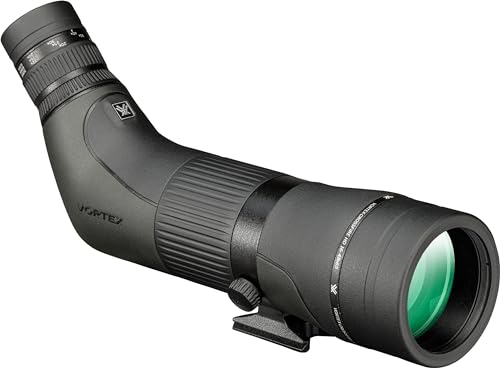
Vortex Crossfire HD 16-48x65 Angled Spotting Scope
$249.00The entry point into a spotting scope worth owning. An angled body is easier to share and easier to use from a low tripod, which is most of what a spotter does on a range.
Best for: a first spotting scope for range work
Check price on Amazon
Vortex Viper PST Gen II 5-25x50 First Focal Plane Riflescope, EBR-7C MOA
$999.00 Full specificationsThe reference precision scope in this price band. The turrets return to zero reliably, which sounds like a low bar and is the single thing cheap scopes fail at after a season.
Best for: a precision rifle that will be dialled hard and often
Check price on Amazon
Athlon Argos BTR GEN3 6-24x50 Riflescope, APRS11 FFP IR MIL Reticle
$379.99 Full specificationsAn illuminated first focal plane mil reticle with a zero stop at a price where those three features almost never appear together, and Athlon transfers its warranty the way Vortex does.
Best for: a mil-reticle precision build on a budget
Check price on Amazon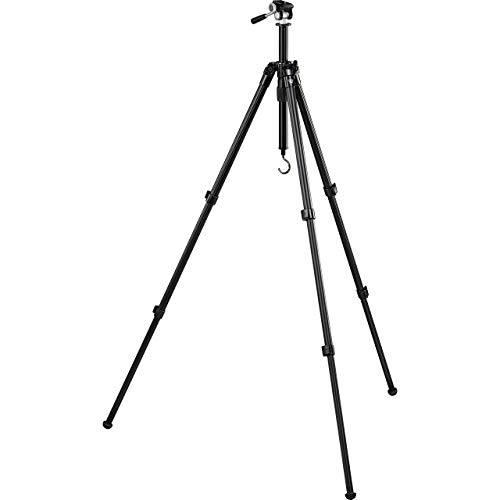
Vortex High Country II Tripod Kit
$199.00Built for glassing rather than for photography, which mostly means it goes low, it locks positively, and the head is a pan head rather than a ball head that creeps.
Best for: backcountry glassing with a spotting scope
Check price on Amazon
Garmin Xero C1 Pro Compact Ballistics Chronograph
$499.99The instrument that made chronographs ordinary. It sits beside you on the bench rather than downrange, so there is nothing to shoot through and nothing to set up in front of the muzzle.
Best for: anyone who dials come-ups and wants real numbers
Check price on AmazonReading the wind clock
Full value means the wind is blowing straight across your line of fire. Anything angled contributes only its crosswind component, which is the cosine of the angle.
A wind at 60 degrees to the shot carries 0.87 of full value, which is close enough to full that most shooters simply treat anything past 45 degrees as full value.
Shooter convention
| Clock position | Angle | Multiplier | What it means |
|---|---|---|---|
| 12 or 6 oclock | Straight at you or straight away | 0 | No drift, and a small vertical effect this model ignores |
| 1, 5, 7 or 11 oclock | 30 degrees off | 0.5 | Half value |
| 2, 4, 8 or 10 oclock | 60 degrees off | 0.87 | Most of full value, and usually treated as full |
| 3 or 9 oclock | Straight across | 1.0 | Full value, the worst case |
The clock convention places 12 straight ahead. A head or tail wind does have a small vertical effect through aerodynamic jump, which this model does not include.
Why ballistic coefficient matters more here than for drop
Two loads with very different ballistic coefficients can have similar drop curves if their muzzle velocities differ to compensate. They will not have similar wind drift.
Drift depends on lag time, which is a direct measure of how much velocity the bullet has shed. A high ballistic coefficient bullet holds velocity, accumulates less lag, and drifts less, and no amount of extra muzzle velocity fully compensates for a poor coefficient at distance.
This is the real argument for cartridges like the 6.5 Creedmoor, and it is frequently explained badly. Its advantage is not that it shoots flat. It is that a 140 grain bullet with a 0.61 coefficient at a modest 2,710 feet per second drifts less than faster, worse-shaped bullets, and drift is the error you cannot look up.
What this model does not know
Three things, and they matter in roughly this order.
- The wind along the flight path. You can feel the wind at your position and read mirage part way. What the air is doing at 400 yards over a different piece of ground is a guess, and it dominates the error at distance.
- Aerodynamic jump. A crosswind produces a small vertical deflection as well as a horizontal one, because the bullet yaws slightly as it leaves the muzzle. It is small and it is not modelled here.
- Spin drift and Coriolis. Both are real, both are horizontal, and both are dwarfed by wind uncertainty inside 800 yards.
Which is why the useful skill is not a more precise calculator. It is reading mirage, watching vegetation at several distances, and correcting from your own last shot.
Sources
- The lag time method for crosswind deflection, the basis of published drift tables
- G1 standard drag function, the published Ingalls and Siacci reference
Frequently asked questions
How much does a 10 mph wind move a bullet at 500 yards?
For a 168 grain .308 at 2,650 feet per second, roughly 22 inches in a full value crosswind, which is about 4.2 MOA or 1.2 mil of hold. A higher ballistic coefficient bullet at the same velocity drifts noticeably less, which is the main practical argument for modern high coefficient bullets.
What does full value wind mean?
A wind blowing straight across your line of fire, at 3 or 9 oclock, which produces the maximum drift. An angled wind contributes only its crosswind component: a 60 degree wind is 0.87 of full value and a 30 degree wind is half. Most shooters treat anything beyond about 45 degrees as full value and correct from the shot.
Does a faster bullet always drift less?
No, and this is the most useful thing on this page. Drift depends on lag time, which measures how much velocity the bullet has shed. A well shaped bullet at modest velocity frequently drifts less than a poorly shaped one launched faster, because it sheds less. Ballistic coefficient matters more for wind than it does for drop.
Should I dial wind or hold it?
Hold it, almost always. Wind changes between the moment you dial and the moment you break the shot, and a dialled correction is a commitment to a condition that may already have passed. Holding lets you adjust continuously as you watch the mirage, and it leaves your windage turret at a known zero.
How accurate is this wind figure?
The model is good to roughly ten percent inside 600 yards. The larger error is not the model: it is that you cannot know the wind along the whole flight path. Treat the output as a starting hold, watch where the shot lands, and correct. Nobody calls wind perfectly from a calculator.
What is the best way to read wind?
Mirage through a spotting scope is the most sensitive indicator available, because it shows you the air rather than the effect of the air. Beyond that, watch vegetation at several distances rather than only at your position, and weight the wind nearer the muzzle more heavily, because deflection early in the flight has the whole remaining distance to grow.
Researched, not professional advice. This page is compiled from published manufacturer specifications, published optical and ballistic formulas, and owner-review consensus, not hands-on testing. Figures described as a rule of thumb are shooter convention rather than sourced numbers, and they are labelled that way wherever they appear. Ballistic figures come from a point mass model using the ballistic coefficient the maker publishes, so treat them as a starting point and confirm them on paper at a measured distance. Confirm your firearm is unloaded with the action open before you mount, level, torque or bore sight anything. Verify a zero only on a supervised range or a safe, legal backstop, know what lies beyond your target, and follow the law where you hunt and shoot, including rules on land access and permitted cartridges.