Scope tube diameter
1 Inch or 30mm Scope Tube: Which Should You Buy?
Quick answer
A 30mm tube does not gather more light, that is set entirely by the objective lens. What it buys is more room for the erector to travel, meaning more total elevation adjustment. A 1 inch tube has the widest ring selection and is plenty for a scope that never needs to dial far past its zero.

Vortex Diamondback 3-9x40 Riflescope, Dead-Hold BDC Reticle
$249.00 Full specificationsA 1 inch tube in the widest-stocked ring size in this catalog, on a hunting scope whose 3-9x range rarely demands more elevation travel than a 1 inch tube provides.
Best for: the buy-once hunting scope at a sensible price
Check price on Amazon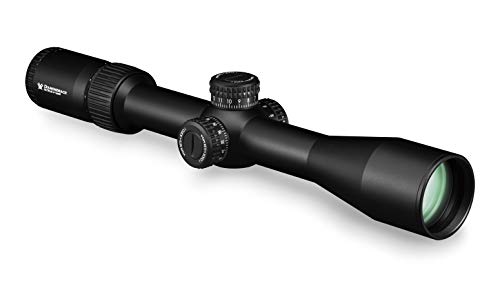
Vortex Diamondback Tactical 4-16x44 First Focal Plane Riflescope, EBR-2C MOA
$399.00 Full specificationsA 30mm tube built for a first focal plane tactical scope, giving the erector more room inside for the total elevation travel a long range dialling scope actually needs.
Best for: a first precision rifle scope, or a hunting rifle that will be dialled
Check price on AmazonThe tube of a riflescope is a structural housing for the erector system and the internal lenses, and it gets shopped like a light-gathering spec anyway. It is not one. Light entering an optic is determined entirely by the objective lens diameter and the magnification, the same exit pupil arithmetic that applies to a 1 inch tube, a 30mm tube, or a 34mm tube built around an identical objective. A larger tube around a 40mm objective does not produce a brighter image than a 1 inch tube around the same 40mm objective.
What the tube diameter actually decides is entirely mechanical: how much room exists inside for the erector system to move, which sets the total elevation and windage adjustment available before the scope runs out of internal travel, and which rings will physically fit it.
These figures are researched from published manufacturer specifications and standard optical and mechanical design, not from disassembling and measuring these two specific scopes.
Does a 30mm tube gather more light? No.
This is the single most persistent myth in scope shopping, and it survives because "bigger tube, brighter picture" sounds intuitive. It is not how the optics work. Light enters through the objective lens at the front of the scope, and everything that governs how much of it reaches your eye, the objective diameter, the magnification, the glass coatings, happens independently of how wide the metal tube around the internal lenses is. Two scopes with an identical 40mm objective and 9x magnification produce an identical exit pupil whether the tube between them is 1 inch or 30mm.
Why not
Exit pupil = objective diameter / magnification. Light transmission is a function of the objective lens, the coatings and the internal glass path, none of which the tube diameter changes.
A 30mm tube around a 40mm objective at 9x gives the identical 4.44mm exit pupil as a 1 inch tube around the same 40mm objective at 9x. The tube is a structural housing, not a light path.
What a 30mm tube actually buys you
A wider tube gives the erector system, the internal assembly that physically tilts to move the point of impact when you dial elevation or windage, more room to travel before it runs out of space inside the tube. More room for the erector translates directly into more total elevation and windage adjustment available across the whole scope, which is exactly what a scope built for dialling large corrections at long range needs.
Total internal elevation travel is frequently not published by manufacturers at all, and where it is not stated, this page will not invent a figure for it. What is consistently true across product lines that offer both tube sizes is that the 30mm version sits meaningfully higher in available travel than the 1 inch version in the same family, which is precisely why long range and tactical scopes default to 30mm or larger tubes and hunting scopes still commonly ship in 1 inch.
Ring compatibility: the tube size must match exactly
Rings are sized to one tube diameter and one only. A 30mm ring will not hold a 1 inch tube, and a 1 inch ring cannot be forced onto a 30mm tube regardless of how it is marketed. This single fact decides which rings you can even consider before price or height enter the decision.
1 inch has the widest stocked ring selection in this catalog, reflecting its long history as the standard American tube size, while 30mm and 34mm selections have grown as those diameters became more common on higher end scopes.
Shooter convention
| Tube diameter | Ring options in this catalog | Typical use |
|---|---|---|
| 1 inch | 10 stocked options | Hunting and rimfire scopes, the widest compatibility with older bases |
| 30mm | 13 stocked options | The current default on scopes with exposed turrets and more elevation travel |
| 34mm and larger | 10 stocked options | Long range and competition scopes built for maximum internal travel |
Counts reflect this catalog's stocked selection, not the entire market, though they mirror the real-world pattern: 1 inch has been the standard American tube the longest and still carries the broadest ring compatibility.
1 inch still makes sense when
A 1 inch tube is the right, unglamorous choice for a rimfire scope, a basic hunting scope with a modest zoom range, or any build where you will zero once and never dial a large correction again. It keeps cost down, it fits the widest range of existing bases and rings including older rifles drilled decades ago, and it gives up nothing in image quality or brightness compared to a 30mm tube around the same objective. The idea that stepping up to 30mm is an automatic upgrade regardless of how the scope will actually be used is exactly the myth this page exists to correct.
Sources
- Vortex Optics published specifications
- Exit pupil, objective diameter divided by magnification, standard published optical formula
- Scope tube and erector travel, standard published mechanical design
Frequently asked questions
Does a 30mm scope tube let in more light than a 1 inch tube?
No. Light entering a riflescope is set entirely by the objective lens diameter and the magnification, which determine exit pupil, along with the glass coatings. The tube is a structural housing for the internal lenses and erector system, and its diameter has no effect on how much light passes through the optic.
What does a bigger scope tube actually give you?
More room inside for the erector system to travel, which increases the total elevation and windage adjustment available before the scope runs out of internal range. This is why long range and tactical scopes, which need large elevation corrections, favor 30mm and 34mm tubes over 1 inch.
Can I put a 30mm ring on a 1 inch scope tube?
No. Ring inside diameter is machined to one specific tube size, and a 30mm ring is physically too large to clamp a 1 inch tube securely. The tube diameter printed on the scope's specifications must match the ring size exactly, with no adapter or shim substituting for a correctly sized ring.
Which tube size has the most ring options?
1 inch, by a wide margin across the market, since it has been the standard American scope tube diameter the longest and fits the broadest range of older and newer bases alike. 30mm has grown into a close second as it became the default on scopes with exposed turrets and more elevation travel.
Do I need a 30mm tube for a hunting rifle?
Usually not. Most hunting scopes with a modest zoom range and a single zero rarely approach the elevation travel limits of a 1 inch tube, so a 30mm tube buys adjustment range you are unlikely to use while adding cost and narrowing your ring options compared to 1 inch.
Is total elevation travel published for most scopes?
Inconsistently. Many manufacturers publish it, but plenty do not, and where it is missing this site will not invent a figure. If total travel matters to your build, such as a very long range dialling setup, check the specific scope's published spec sheet rather than assuming tube diameter alone tells you the answer.
Researched, not professional advice. This page is compiled from published manufacturer specifications, published optical and ballistic formulas, and owner-review consensus, not hands-on testing. Figures described as a rule of thumb are shooter convention rather than sourced numbers, and they are labelled that way wherever they appear. Ballistic figures come from a point mass model using the ballistic coefficient the maker publishes, so treat them as a starting point and confirm them on paper at a measured distance. Confirm your firearm is unloaded with the action open before you mount, level, torque or bore sight anything. Verify a zero only on a supervised range or a safe, legal backstop, know what lies beyond your target, and follow the law where you hunt and shoot, including rules on land access and permitted cartridges.