Low light, 40 mm objectives
What exit pupil does a 40 mm objective give at 6x?
Quick answer
A 40 mm objective at 6x gives an exit pupil of 6.67 mm, a twilight factor of 15.5 and a relative brightness of 44.4. That is larger than most adult pupils open to in the dark, so the eye becomes the limiting factor rather than the optic.
Exit pupil is the diameter of the cone of light leaving the eyepiece, and it is simply the objective diameter divided by the magnification. At 40 mm and 6x that is 6.67 mm.
It matters because your own pupil has a diameter too. In bright daylight a human pupil closes to around 2 to 3 mm, so almost any optic delivers more light than the eye can accept and exit pupil is irrelevant. In near darkness a young pupil opens to about 7 mm and a sixty year old pupil to about 5 mm, and at that point an exit pupil smaller than your own pupil is a dim image, and one larger than your pupil is wasted glass.
This is a genuinely bright combination. At 6.67 mm the exit pupil is larger than most adult pupils open to in the dark, so your eye rather than the optic is the limit.
On this page
The arithmetic for a 40 mm objective at 6x
The three published low light figures
exit pupil = 40 / 6 = 6.67 mm twilight factor = square root of (40 x 6) = 15.5 relative brightness = exit pupil squared = 44.4
All three are standard published optical formulas. None of them says anything about glass quality, coatings or contrast, which is why two optics with identical figures can look completely different at last light.
What the same objective gives you across the whole magnification range, which is the table that actually tells you where to stop turning the ring as the light goes.
A 40 mm objective gives a 6.67 mm exit pupil at 6x, falling to 1.67 mm at 24x.
Sourced figure
| Magnification | Exit pupil | Twilight factor | Relative brightness | |
|---|---|---|---|---|
| 4x | 10 mm | 12.6 | 100 | |
| 6x | 6.67 mm | 15.5 | 44.4 | This page |
| 8x | 5 mm | 17.9 | 25 | |
| 10x | 4 mm | 20 | 16 | |
| 12x | 3.33 mm | 21.9 | 11.1 | |
| 16x | 2.5 mm | 25.3 | 6.3 | |
| 20x | 2 mm | 28.3 | 4 | |
| 24x | 1.67 mm | 31 | 2.8 |
Twilight factor rewards magnification as well as aperture, which is why it does not simply track exit pupil. It is a comparative index rather than a measurement of how bright anything looks.
How other objective sizes compare at 6x
Holding magnification at 6x and changing only the objective, which is the purchase decision: a bigger objective costs weight, height and money, and buys exit pupil.
At 6x, going from a 32 mm to a 56 mm objective takes the exit pupil from 5.33 mm to 9.33 mm.
Sourced figure
| Objective | Exit pupil | Twilight factor | |
|---|---|---|---|
| 32 mm | 5.33 mm | 13.9 | |
| 40 mm | 6.67 mm | 15.5 | This page |
| 42 mm | 7 mm | 15.9 | |
| 44 mm | 7.33 mm | 16.2 | |
| 50 mm | 8.33 mm | 17.3 | |
| 56 mm | 9.33 mm | 18.3 |
A larger objective also needs taller rings and adds weight high on the rifle. Check what ring height each objective actually needs before deciding.
What your own eye can actually use
The pupil figures below are a population range rather than a specification, and they vary between individuals far more than the averages suggest. They are still the right way to think about whether a bigger objective will do anything for you.
A 6.67 mm exit pupil fills or exceeds the pupil of most adults at last light.
Shooter convention
| Age band | Typical dark adapted pupil | What this optic delivers |
|---|---|---|
| 20 to 30 | 7 mm | 95 percent of the pupil filled |
| 30 to 40 | 6.5 mm | Fully used |
| 40 to 50 | 6 mm | Fully used |
| 50 to 60 | 5.5 mm | Fully used |
| 60 and over | 5 mm | Fully used |
Pupil size falls with age and varies widely between individuals. This is a population range from published ophthalmic literature, not a measurement of any particular reader.
Why the numbers are not the whole story
Exit pupil, twilight factor and relative brightness are all derived from two numbers printed on the box. They know nothing about the glass.
Light transmission is what actually separates optics at last light, and it depends on the coatings, the number of air-to-glass surfaces and the quality of the prisms or erector. A fully multi-coated optic can transmit above 90 percent of the light entering it and a poorly coated one well under 80, and that difference is invisible in any formula on this page. Two scopes with an identical 6.67 mm exit pupil can differ by a noticeable margin in the last ten minutes of legal light.
The practical rule: use these numbers to rule optics OUT, not to rule them in. A 6.67 mm exit pupil tells you what this combination cannot do. Whether it is good is a question about the glass, and the honest answer comes from the maker reputation and from owner consensus rather than from arithmetic.
Optics with a 40 mm objective
Chosen against the numbers on this page rather than from a general list, so the recommendation cannot contradict the arithmetic above.

Vortex Diamondback 3-9x40 Riflescope, Dead-Hold BDC Reticle
$249.00 Full specificationsThe same configuration as the Crossfire II with better glass and a cleaner image at the top of the magnification range, which is exactly where a cheaper scope goes soft and dark.
Best for: the buy-once hunting scope at a sensible price
Check price on Amazon
Leupold VX-Freedom 3-9x40 CDS Duplex Riflescope
$299.99 Full specificationsThe CDS turret is the point: Leupold will cut you a custom elevation dial marked in yards for your load, so dialling a come-up stops being arithmetic and becomes reading a number off the turret.
Best for: a hunter who wants to dial rather than hold over
Check price on Amazon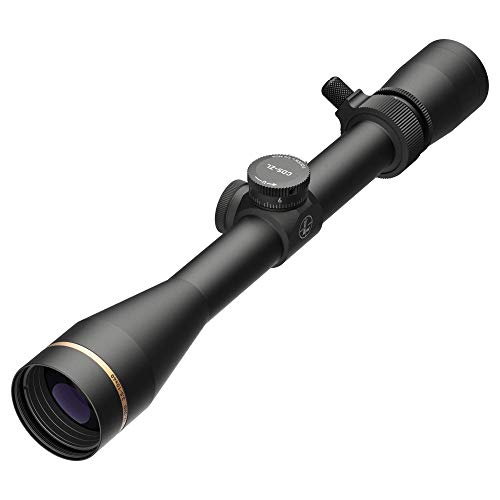
Leupold VX-3HD 3.5-10x40 CDS-ZL Duplex Riflescope
$599.99 Full specificationsA genuine step up in low light performance over the VX-Freedom at the same objective size, which is the half hour either side of legal light where most hunting is decided.
Best for: first and last light hunting where the extra glass earns its money
Check price on Amazon
Burris Fullfield E1 3-9x40 Riflescope
$169.99 Full specificationsA long-running American hunting scope with a forever warranty and a reticle with holdover marks that are actually usable rather than decorative.
Best for: a budget hunting build that still wants a real warranty
Check price on Amazon
Bushnell Banner 2 3-9x40 Riflescope, DOA Quick Ballistic Reticle
$89.00The cheapest scope on this site we would actually mount on a rifle. Bushnell has been making the Banner for decades and will stand behind it, which separates it from the identical-looking unbranded listings beside it.
Best for: the lowest honest price for a working hunting scope
Check price on AmazonHow we chose
We did not test these optics in person and we never claim to. Picks are researched from manufacturer specification sheets, published optical and ballistic formulas, and the recurring themes in verified owner reviews. Every pick is matched to a real objective diameter, a real tube size, a real ring height or a real exit pupil rather than to a price bracket, and it is placed in the tier where its capability actually belongs. Where a figure is shooter convention rather than a sourced number we label it, and where a manufacturer does not publish a figure we leave it out instead of estimating it.
Sources
- Exit pupil, twilight factor and relative brightness, standard published optical formulas
- Dark adapted pupil diameter by age, published ophthalmic population ranges
Frequently asked questions
What is the exit pupil of a 40 mm scope at 6x?
6.67 mm. Exit pupil is objective diameter divided by magnification, so 40 divided by 6 gives 6.67 mm. This is exact arithmetic and it is the same for every optic with those two numbers, regardless of price or glass quality.
Does a bigger objective always mean a brighter image?
Only until the exit pupil reaches the size of your own pupil. Beyond that the extra light falls on your iris rather than entering your eye, and the only thing the larger objective buys is weight, cost and the taller rings it needs. In daylight, where your pupil is 2 to 3 mm, almost no optic is aperture limited at all.
What is a good exit pupil for hunting?
Around 4 to 5 mm is the usual target for shooting in the first and last half hour of light, which is when most hunting is decided. Below about 3 mm the image dims noticeably and the eye box becomes unforgiving. Above about 5 mm you are past what most adult eyes can use and the extra aperture stops paying.
What is twilight factor and is it useful?
It is the square root of magnification times objective diameter, and here it is 15.5. It exists because resolving detail at dusk depends on magnification as well as on light, so it rewards both. Use it to compare two optics of similar build quality, and ignore it when comparing across price brackets, because it says nothing about coatings or glass.
Does a 30 mm tube gather more light than a 1 inch tube?
No. This is the most persistent myth in the subject. Light entering an optic is determined by the objective lens, and the tube is a housing that the erector assembly lives inside. A larger tube leaves room for more internal adjustment travel, which is a real and useful benefit, but it does not change brightness at all.
Should I buy a 56 mm objective for low light?
Only if you actually shoot at high magnification in poor light, and only if you can accept the taller rings it forces. A 56 mm objective at 24x gives 2.33 mm, which is less than a 42 mm objective at 8x. Turning magnification down does more for low light performance than buying aperture does.
Researched, not professional advice. This page is compiled from published manufacturer specifications, published optical and ballistic formulas, and owner-review consensus, not hands-on testing. Figures described as a rule of thumb are shooter convention rather than sourced numbers, and they are labelled that way wherever they appear. Ballistic figures come from a point mass model using the ballistic coefficient the maker publishes, so treat them as a starting point and confirm them on paper at a measured distance. Confirm your firearm is unloaded with the action open before you mount, level, torque or bore sight anything. Verify a zero only on a supervised range or a safe, legal backstop, know what lies beyond your target, and follow the law where you hunt and shoot, including rules on land access and permitted cartridges.