Mounting a scope
Intermediate Scope Setup: First Focal Plane and a Canted Base
Quick answer
A complete first focal plane setup built for dialling costs about $1,381 including a 20 MOA canted base, matched rings, an anti-cant level, an adjustable torque wrench and a chronograph. The base and the chronograph are what make it a distance setup rather than a hunting one.
This is the build where the rifle stops being a hunting rifle and starts being a system you dial. Three purchases mark that transition, and none of them is the scope.
The canted base converts unused down travel in the erector into usable up travel, which is what lets a scope reach past 600 yards at all. The anti-cant level stops dialled elevation from quietly becoming windage. The chronograph replaces a catalogue muzzle velocity with your own, which is the difference between a drop table that works at 600 yards and one that does not.
The scope itself is a first focal plane design, so the reticle subtends correctly at every magnification and a hold taken at 8x is the same hold at 16x.
The complete setup: $1,381
$1,381A rifle with a receiver drilled for a one piece or two piece Picatinny base. Check your action pattern before ordering. If you are coming from the beginner setup, the levelling tool and bags carry over.
The optic
First focal plane, exposed turrets, and a reticle in the same unit as the turrets so a hold and a dial are the same number.
| Item | Qty | Each | Line |
|---|---|---|---|
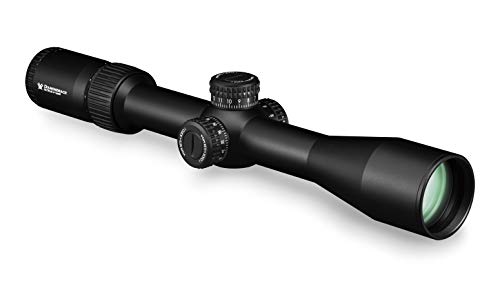 Vortex Diamondback Tactical 4-16x44 First Focal Plane Riflescope, EBR-2C MOA First focal plane at the lowest honest price, with a 30 mm tube for elevation travel Vortex Diamondback Tactical 4-16x44 First Focal Plane Riflescope, EBR-2C MOA First focal plane at the lowest honest price, with a 30 mm tube for elevation travel | 1 | $399.00 | $399.00 |
| The optic subtotal | $399.00 | ||
The mount, which is where the distance comes from
A canted base is the cheapest way to buy back elevation travel. Matched rings remove ring stress on the tube.
| Item | Qty | Each | Line |
|---|---|---|---|
 Weaver Extended Multi-Slot Base, Remington 700 Short Action, 20 MOA Twenty MOA of built-in cant, converting unused down travel into usable up travel Weaver Extended Multi-Slot Base, Remington 700 Short Action, 20 MOA Twenty MOA of built-in cant, converting unused down travel into usable up travel | 1 | $53.79 | $53.79 |
 Vortex Pro Series Riflescope Rings, 30mm, Medium 1.00 inch A full inch to tube centre, machined to a tolerance that will not mark the tube Vortex Pro Series Riflescope Rings, 30mm, Medium 1.00 inch A full inch to tube centre, machined to a tolerance that will not mark the tube | 1 | $75.99 | $75.99 |
| The mount, which is where the distance comes from subtotal | $129.78 | ||
Mounting tools
The level is now permanent rather than a bench tool, because cant matters every time you dial.
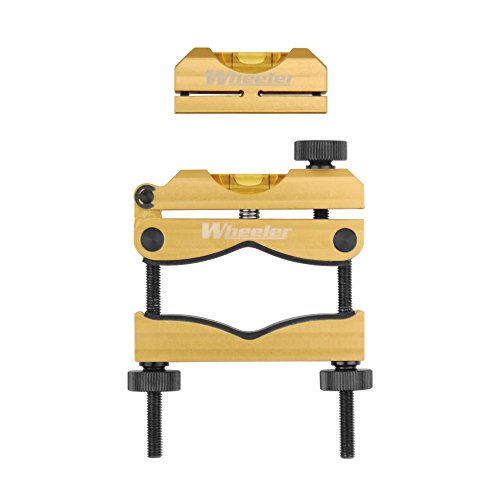

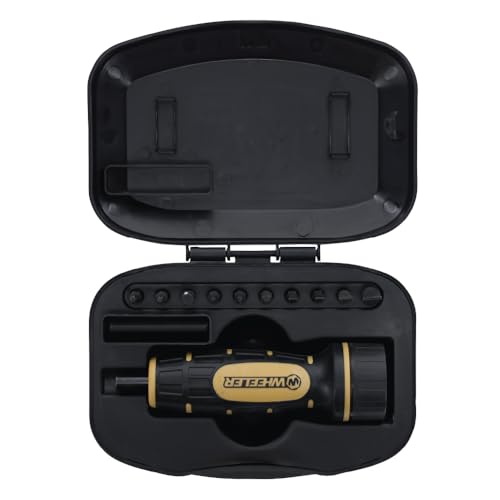
Real numbers instead of catalogue numbers
Every drop figure on this site starts from a muzzle velocity. A catalogue figure comes from a test barrel that is not your barrel.
| Item | Qty | Each | Line |
|---|---|---|---|
 Garmin Xero C1 Pro Compact Ballistics Chronograph Sits beside you on the bench rather than downrange, so there is nothing in front of the muzzle Garmin Xero C1 Pro Compact Ballistics Chronograph Sits beside you on the bench rather than downrange, so there is nothing in front of the muzzle | 1 | $499.99 | $499.99 |
| Real numbers instead of catalogue numbers subtotal | $499.99 | ||
Zeroing and confirming
A mechanical rest removes most of the group size that is not the rifle, which is what makes a correction trustworthy.

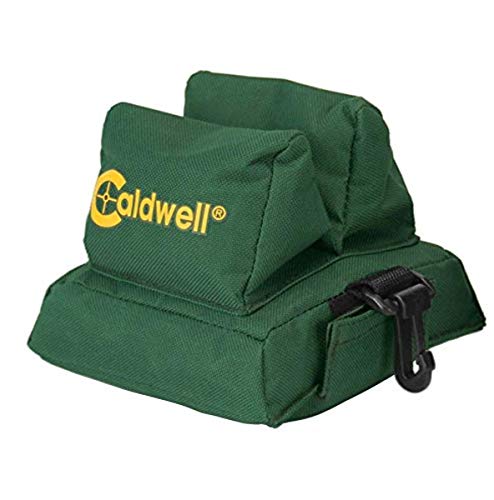

Protection
A scope with exposed turrets is more vulnerable in transit than a capped hunting scope, not less.


Total for this setup
Optics and mounting hardware only, at the listed prices when this page was compiled. It does not include the rifle, ammunition, range fees, shipping or sales tax.
Why a 20 MOA base is the highest leverage part here
A scope has a fixed amount of internal elevation travel, and roughly half of it sits above mechanical centre. A rifle that is not perfectly aligned eats into that half before you dial a single click of come-up.
A canted base tilts the whole scope down at the front, so zero sits low in the erector range rather than in the middle. The unused down travel becomes usable up travel, and 20 MOA of cant is 20 MOA of extra reach for the price of a base.
The catch, and it is a real one: on a rifle that will never shoot past 300 yards, a canted base can make it impossible to zero at all, because the erector runs out of down adjustment before the impact reaches the line of sight. Twenty MOA is correct for a distance rifle and wrong for a woods rifle, and that is the whole decision.
What a chronograph actually buys you
The same load and the same scope, with a catalogue muzzle velocity against a measured one that turns out to be 100 feet per second slower. This is an ordinary difference, not a worst case.
A muzzle velocity that is 100 feet per second optimistic puts you roughly a foot low at 600 yards, which is a clean miss on anything smaller than a deer.
Sourced figure
| Distance | Error from a 100 fps overestimate | In MOA |
|---|---|---|
| 200 yd | About 0.5 in | About 0.25 MOA |
| 400 yd | About 3 in | About 0.7 MOA |
| 600 yd | About 11 in | About 1.8 MOA |
| 800 yd | About 26 in | About 3.1 MOA |
| 1000 yd | About 51 in | About 4.9 MOA |
Figures are the scale of the error from a G1 point mass model on a typical mid-weight centrefire load, not a specification for any particular cartridge. The point is the shape of the curve: velocity error is negligible up close and dominant at distance.
What you can skip
Two things that look like the obvious next purchase and are not.
- More magnification. Going from 16x to 24x on the same objective costs you exit pupil and gains you mirage. A 44 mm objective at 24x gives 1.83 mm of exit pupil, which is a bright-day-only setting. Read what that actually looks like before paying for it.
- A 34 mm tube. The tube does not gather light and does not make clicks finer. It leaves room for more elevation travel, which is only worth paying for once you have proven that a 30 mm tube plus a 20 MOA base runs out at the distance you actually shoot.
What to upgrade first
Turret feel, which means the scope. The next real improvement is a scope whose turrets have positive, countable detents that you can work in the dark with cold hands without losing your place. That is what separates this tier from the expert one, and it is almost impossible to appreciate from a specification sheet.
Before spending that money, confirm you have run out of elevation. Work out what your load needs at your longest realistic distance and compare it to your scope published travel. If the sum leaves margin, the scope is not your limit.
Frequently asked questions
Do I need a 20 MOA base?
Only if you intend to dial past roughly 500 yards. A canted base converts unused down travel into up travel, which is how a scope reaches distance. On a rifle shot inside 300 yards it does the opposite of helping and can make the rifle impossible to zero, because the erector runs out of down adjustment first.
Is first focal plane worth it for hunting?
Usually not, and this build is not primarily a hunting build. In first focal plane the reticle shrinks as you turn magnification down, so at 4x it can be genuinely hard to see against a dark animal at last light. Second focal plane keeps the reticle a constant visual size, which is the better trade for a hunting rifle.
How much elevation travel do I actually need?
Work out the come-up your load needs at your longest realistic distance, halve your scope published total travel, and compare. Subtract whatever your zero already consumed. If what is left does not comfortably exceed the come-up you need, add a canted base rather than a bigger scope, because it is a tenth of the price.
Why does my dialled elevation move the impact sideways?
Cant. If the reticle is not square to gravity, the elevation turret moves the impact along an axis that is tilted, so part of every click becomes windage. The effect is proportional to how much you dial, which is why it is invisible at 100 yards and obvious at 600. An anti-cant level fixes it permanently.
Can I reuse my hunting rings on this build?
Only if the tube diameter matches exactly and the height clears the objective. A 30 mm ring will not hold a 1 inch tube and shimming one is not a repair. Ring height also changes with a larger objective, so check the clearance before assuming the old rings transfer.
Is a chronograph really necessary?
For shooting inside 300 yards, no. Past about 500 yards it becomes the single largest correctable error in your firing solution, because catalogue muzzle velocities come from test barrels that are usually longer than yours and being 100 feet per second out puts you nearly a foot low at 600 yards.
Researched, not professional advice. This page is compiled from published manufacturer specifications, published optical and ballistic formulas, and owner-review consensus, not hands-on testing. Figures described as a rule of thumb are shooter convention rather than sourced numbers, and they are labelled that way wherever they appear. Ballistic figures come from a point mass model using the ballistic coefficient the maker publishes, so treat them as a starting point and confirm them on paper at a measured distance. Confirm your firearm is unloaded with the action open before you mount, level, torque or bore sight anything. Verify a zero only on a supervised range or a safe, legal backstop, know what lies beyond your target, and follow the law where you hunt and shoot, including rules on land access and permitted cartridges.