Optic Types
3-9x40 Against a 4-16x44
Quick answer
Choose the Vortex Diamondback 3-9x40 for a lighter, brighter all-around hunting scope, and the Vortex Diamondback Tactical 4-16x44 when you genuinely need more reach. At 9x the 40mm objective gives a 4.44mm exit pupil, while the 44mm objective at 16x gives only 2.75mm, and the bigger scope is also heavier and needs taller rings.

Vortex Diamondback 3-9x40 Riflescope, Dead-Hold BDC Reticle
$249.00 Full specificationsA 40mm objective hunting scope that stays bright across its whole range and mounts easily with low or medium rings.
Best for: the buy-once hunting scope at a sensible price
Check price on Amazon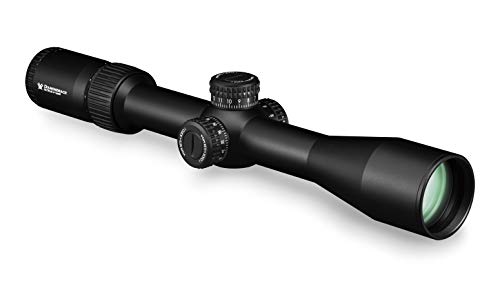
Vortex Diamondback Tactical 4-16x44 First Focal Plane Riflescope, EBR-2C MOA
$399.00 Full specificationsA 44mm first focal plane scope with real reach to 16x, at the cost of a dimmer top end and taller rings.
Best for: a first precision rifle scope, or a hunting rifle that will be dialled
Check price on AmazonA 3-9x40 and a 4-16x44 look like a small step up in numbers on a spec sheet, and the actual difference between them is larger than the objective size suggests. Exit pupil, the diameter of the shaft of light leaving the eyepiece, is exit pupil equals objective diameter divided by magnification, an exact and sourced formula rather than a marketing figure, and it is the honest way to compare these two scopes rather than comparing objective size or top magnification alone.
The 4-16x44 is not simply a "better" scope than the 3-9x40. It is a different tool that trades brightness and weight for magnification reach, and knowing exactly how much of each you are trading is the point of this page. Built from published specifications and the same exit pupil math used across this whole site, not our own hands-on testing.
What exit pupil does each scope actually give you?
Exit pupil equals objective diameter in millimeters divided by magnification, an exact formula rather than an estimate.
At their own top magnification the 3-9x40 gives a 4.44mm exit pupil at 9x, while the 4-16x44 gives only 2.75mm at 16x, a real and noticeable difference in a dark dawn or dusk field of view.
Sourced figure
| Magnification | 3-9x40 exit pupil | 4-16x44 exit pupil |
|---|---|---|
| Lowest setting | 13.33mm at 3x | 11.00mm at 4x |
| 9x (shared) | 4.44mm | 4.89mm |
| Each scope’s own top end | 4.44mm at 9x | 2.75mm at 16x |
Figures are exact arithmetic from the sourced formula, objective diameter divided by magnification, using each scope’s published objective size.
Why does a smaller exit pupil matter in low light?
A dark-adapted human pupil typically opens to somewhere in the 5 to 7mm range depending on age and lighting, a figure that is a convention rather than a precise, individually measured number. When a scope's exit pupil is smaller than the shooter's own pupil, the scope becomes the limiting factor on how much light reaches the eye, and the image dims accordingly. At 2.75mm, the 4-16x44's top-end exit pupil is well under even a conservative dark-adapted pupil estimate, which is exactly why a scope like this feels noticeably dimmer at full power in the last legal minutes of light than the same scope does at a lower magnification.
The 3-9x40 never falls below 4.44mm anywhere in its range, which keeps it comfortably usable in dim conditions at every setting a hunter would actually dial to. That is the real, practical payoff of a smaller objective and a shorter zoom range: consistent brightness rather than a wider ceiling that costs brightness at the top.
What does the bigger objective cost you in weight and rings?
A 44mm objective bell is physically larger than a 40mm bell, which means it needs more ring clearance above the rifle's receiver to avoid the objective touching the barrel or the action. Where a 40mm scope commonly clears with low or medium rings on most platforms, a 44mm objective typically pushes the requirement up to a taller ring, adding height over bore and changing the geometry of the whole mounting setup. Check the exact clearance a 44mm objective needs on a 30mm tube before ordering rings, since guessing at ring height is one of the most common and avoidable mounting mistakes on a scope this size.
The 4-16x44 is also simply heavier than the 3-9x40, carrying a longer main tube for the wider zoom range and a first focal plane erector system on most models in this class. None of this makes the 4-16x44 the wrong choice. It makes it the correct choice specifically for a shooter who needs the reach and is willing to carry and mount the extra size that reach requires.
Sources
- Vortex published specifications
- Exit pupil formula: objective diameter divided by magnification, an exact optical relationship
Frequently asked questions
What is the exit pupil of a 3-9x40 at its top magnification?
4.44mm, from the sourced formula of objective diameter divided by magnification: 40 divided by 9. That stays comfortably above a typical dark-adapted pupil size at every setting the scope offers, which is why a 3-9x40 rarely feels dim in the field even in fading light.
Why does a 4-16x44 feel dimmer than a 3-9x40 at full power?
Because its exit pupil at 16x is only 2.75mm, well under the 4.44mm the 3-9x40 gives at its own top end. The 4-16x44's larger 44mm objective sounds like an advantage, but at 16x the light is being spread across nearly double the magnification, which shrinks the exit pupil below what the 40mm scope ever produces.
Does a bigger objective always mean a brighter scope?
Only relative to the magnification it is paired with. Objective size alone does not determine brightness; exit pupil, which divides that objective by the actual magnification in use, does. A 44mm objective at 16x gives less exit pupil than a 40mm objective at 9x, so the smaller-objective scope is genuinely brighter at its own top end in this specific comparison.
Do I need taller rings for a 4-16x44 than for a 3-9x40?
Usually yes. The 44mm objective bell is physically larger and needs more clearance above the receiver than a 40mm bell does, which typically means stepping up from low or medium rings to a taller height. Confirm the exact clearance for your specific rifle and tube diameter before ordering, since ring height needs vary by platform.
Which scope is better for hunting in low light?
The 3-9x40, on exit pupil alone, because it never drops below 4.44mm anywhere in its range. The 4-16x44 can match or beat that brightness at its own lower settings, around 9x, but loses the advantage once dialed up toward 16x, where the exit pupil falls to 2.75mm.
Is the extra magnification on a 4-16x44 worth the tradeoffs?
Only if you genuinely shoot far enough to need it. The 4-16x44 trades exit pupil, weight, and ring height for real reach past what a 3-9x40 comfortably resolves. For hunting inside 200 to 300 yards, most shooters do not need that reach and are better served by the lighter, consistently brighter 3-9x40.
Researched, not professional advice. This page is compiled from published manufacturer specifications, published optical and ballistic formulas, and owner-review consensus, not hands-on testing. Figures described as a rule of thumb are shooter convention rather than sourced numbers, and they are labelled that way wherever they appear. Ballistic figures come from a point mass model using the ballistic coefficient the maker publishes, so treat them as a starting point and confirm them on paper at a measured distance. Confirm your firearm is unloaded with the action open before you mount, level, torque or bore sight anything. Verify a zero only on a supervised range or a safe, legal backstop, know what lies beyond your target, and follow the law where you hunt and shoot, including rules on land access and permitted cartridges.