Hunting scopes
Best Hunting Riflescopes
Quick answer
For most hunters, the Vortex Diamondback 3-9x40 Riflescope, Dead-Hold BDC Reticle at $249.00 is the strongest all-around pick: 3-9x magnification and a 40mm objective cover everything from thick timber to open fields, the Dead-Hold BDC reticle gives a fast holdover past 200 yards, and a transferable lifetime warranty backs it for as long as you own the rifle.
A hunting scope has one job: let you place a bullet in a vital zone from field positions, in changing light, without you thinking about the optic at all. That is a narrower brief than it sounds, and it rules out most of what a long range or competition scope is built to do.
Almost every hunting shot in North America is taken inside 300 yards, and a large share are inside 150. That is why 3-9x40 remains the default magnification and objective combination: it is bright enough at dawn and dusk, light enough to carry all day, and it covers a field of view wide enough to find a moving animal fast.
This roundup is researched from published manufacturer specifications and owner-review consensus. We did not test these scopes in person, and a scope that looks identical to another on a spec sheet can still differ in glass quality, which no published number captures.
On this page
What actually separates a hunting scope from a target scope?
A hunting scope is judged by how it performs in the first and last twenty minutes of legal shooting light, carried on a sling for miles, through temperature swings a bench gun never sees. A target or competition scope is judged by turret repeatability at known distances in daylight. The two briefs pull in different directions.
That is why almost every scope on this page uses a simple duplex or BDC reticle rather than a complex holdover grid, and capped rather than exposed turrets. A hunting shot is usually taken once, close to a known zero, without time to dial. A reticle you can read instantly matters more than one you can compute with.
The one exception is genuinely long range, open country hunting, which behaves more like a precision discipline than a woods hunt. See the elk hunting scope roundup for that case and the deer hunting scope roundup for the more common close-and-modest-range case.
Warranty matters more on a hunting scope than on almost any other category of optic, because a hunting rifle lives in a truck, a boat and a saddle scabbard rather than a padded case. A transferable lifetime warranty is not marketing filler here: it is the reason a $130 scope can be a defensible purchase, because the manufacturer, not you, absorbs the risk of a scope that gets knocked around in the field for a decade.
Beginner: the first hunting scope
The goal at this tier is a scope that holds zero through a season of field use and nothing more. Extra magnification, exposed turrets and premium glass are wasted money if the rifle spends most of its life leaning in a truck cab.

Vortex Crossfire II 3-9x40 Riflescope, Dead-Hold BDC Reticle
$128.99 Full specificationsA Dead-Hold BDC reticle in a 3-9x40 configuration for {{price:vortex-crossfire-ii-3-9x40}}, backed by a transferable lifetime warranty that costs nothing extra and outlasts several scopes at this price.
Best for: A first deer rifle on a tight budget.
Check price on Amazon
Bushnell Banner 2 3-9x40 Riflescope, DOA Quick Ballistic Reticle
$89.00At {{price:bushnell-banner-2-3-9x40}} this is close to the floor of what is worth mounting on a hunting rifle at all, with a DOA Quick Ballistic reticle for a fast holdover past the zero.
Best for: A truck gun or a loaner rifle that does not need to be perfect.
Check price on AmazonIntermediate: the buy-once pick
This is the scope most hunters should actually own: enough glass quality to matter at last light, a warranty that survives being dropped once, and nothing you will outgrow before the rifle does.

Vortex Diamondback 3-9x40 Riflescope, Dead-Hold BDC Reticle
$249.00 Full specificationsAt {{price:vortex-diamondback-3-9x40}} it uses the same Dead-Hold BDC reticle as the Crossfire II with noticeably better glass, and the transferable lifetime warranty means a second owner of this rifle inherits it too.
Best for: Hunters who want to buy one scope and stop thinking about it.
Check price on Amazon
Leupold VX-Freedom 3-9x40 CDS Duplex Riflescope
$299.99 Full specificationsThe CDS turret can be ordered cut to your own load's drop, at {{price:leupold-vx-freedom-3-9x40-cds}}, so a 300 yard shot becomes dial-and-hold rather than a guessed holdover.
Best for: Hunters who already know their load and want to dial rather than hold over.
Check price on AmazonExpert: the last useful upgrade
Past this tier, hunting glass mostly buys resolution at the edges of light rather than anything that changes what shots you can take. It is a real difference and it shows up in the last ten minutes before legal shooting light ends, not before.
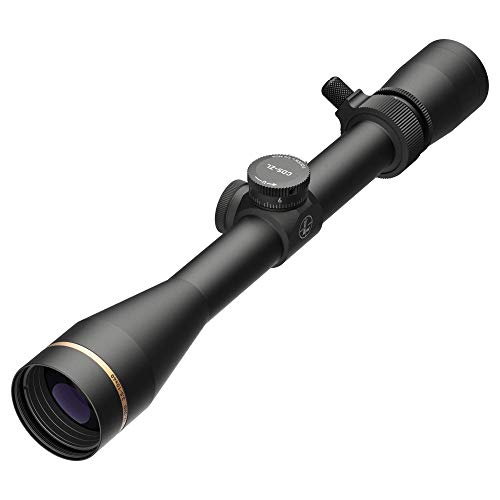
Leupold VX-3HD 3.5-10x40 CDS-ZL Duplex Riflescope
$599.99 Full specificationsAt {{price:leupold-vx3hd-3-5-10x40}} the CDS-ZL turret returns to zero reliably and the glass is visibly clearer at dusk than anything in the tiers below it, which is where it earns the price.
Best for: A hunter who has already worn out a budget scope and knows exactly what they were missing.
Check price on AmazonWho should not buy this tier: Anyone buying their first hunting scope, or anyone who hunts exclusively inside 150 yards from a fixed stand in good light. Neither situation uses what the extra glass and the custom dial actually buy.
Which magnification and objective actually fit your hunting?
Match the scope to the terrain rather than to the biggest number on the box. This is convention rather than physics: it reflects how most hunters describe what has worked for them, not a measured standard.
A 3-9x40 covers the large majority of hunting shots taken inside 300 yards, while only open-country hunting past 300 yards justifies more magnification and a bigger objective.
Shooter convention
| Scenario | Magnification | Objective | Reticle |
|---|---|---|---|
| Whitetail in timber | 2-7x or 3-9x | 32 to 40mm | Duplex or simple BDC |
| Deer over fields and fence lines | 3-9x | 40 to 44mm | BDC with a holdover past 200 yards |
| Open-country elk or mule deer | 4-16x or 3.5-10x | 44 to 50mm | FFP MOA or mil, or a BDC cut for the load |
| Predator or varmint calling | 4-16x | 40 to 44mm | Fine duplex or mil-dot for small targets |
| General all-purpose | 3-9x | 40mm | Duplex or BDC |
These are starting points, not rules. A woods hunter who occasionally still-hunts a powerline cut benefits from the higher end of their row, not the lower end.
How we chose
We did not test these optics in person and we never claim to. Picks are researched from manufacturer specification sheets, published optical and ballistic formulas, and the recurring themes in verified owner reviews. Every pick is matched to a real objective diameter, a real tube size, a real ring height or a real exit pupil rather than to a price bracket, and it is placed in the tier where its capability actually belongs. Where a figure is shooter convention rather than a sourced number we label it, and where a manufacturer does not publish a figure we leave it out instead of estimating it.
Sources
- Manufacturer published specifications for each scope listed
- Owner-review consensus aggregated across major retailers
Frequently asked questions
What magnification do I actually need for hunting?
For most hunting inside 300 yards, 3-9x covers it completely. The extra numbers on a 4-16x or a 6-24x buy resolution at distance you will rarely use in the field, at the cost of a longer, heavier scope and a narrower field of view for finding a moving animal quickly.
Do I need a BDC reticle for hunting?
Only if you shoot past your zero distance regularly. A BDC reticle adds holdover marks calibrated to a specific load's drop, which is useful past 200 yards. Inside that, a plain duplex reticle and a solid zero do the same job with one less thing to get wrong under pressure.
Is first focal plane worth it for hunting?
Usually not. In first focal plane the reticle shrinks at low magnification, which can make it hard to see against a dark animal at last light, exactly when you need it most. Second focal plane keeps the reticle a constant size and is the better trade for almost all hunting.
How much should I spend on a first hunting scope?
Enough to get a real duplex or BDC reticle and a transferable warranty, and no more until you know what you are missing. The Vortex Crossfire II 3-9x40 Riflescope, Dead-Hold BDC Reticle at $128.99 covers this completely, and spending more on a first scope usually teaches you less than spending time behind the rifle.
Does objective size matter for hunting?
Mostly for low light. A 40mm objective at 8x gives a 5.0mm exit pupil, which covers ordinary dusk and dawn shooting. A 50mm objective at the same power gives 6.25mm, which matters in the last few minutes of legal light and costs you ring height and weight the rest of the day.
Should I buy a scope with exposed or capped turrets for hunting?
Capped, for almost every hunting scope. Exposed turrets are for shooters who dial a known come-up at distance, which describes very little ordinary hunting. A cap protects the turret from being bumped in a scabbard or a truck bed, which is a far more common failure than needing to dial in the field.
Researched, not professional advice. This page is compiled from published manufacturer specifications, published optical and ballistic formulas, and owner-review consensus, not hands-on testing. Figures described as a rule of thumb are shooter convention rather than sourced numbers, and they are labelled that way wherever they appear. Ballistic figures come from a point mass model using the ballistic coefficient the maker publishes, so treat them as a starting point and confirm them on paper at a measured distance. Confirm your firearm is unloaded with the action open before you mount, level, torque or bore sight anything. Verify a zero only on a supervised range or a safe, legal backstop, know what lies beyond your target, and follow the law where you hunt and shoot, including rules on land access and permitted cartridges.