Rangefinding binoculars
Vortex Fury HD 5000 10x42 Review
Quick answer
The Vortex Fury HD 5000 10x42 Laser Rangefinding Binoculars combines a 10x42 binocular and an angle-compensated laser rangefinder in one body, priced at $979.00. Its 42 mm objective gives the same 4.2 mm exit pupil as a plain 10x42 binocular, and the argument for it is that the animal is already in the glass when you press the range button, at the cost of one instrument instead of two.
A separate binocular and a separate rangefinder solve two different problems with two different devices, and the practical cost of that is switching instruments at the exact moment a shot is coming together: lower the binocular, find the rangefinder, find the animal again in a narrower field of view, range it, then find it a third time in the scope. The Fury HD 5000 exists to remove two of those three finds by putting the rangefinder inside the binocular you are already looking through.
At $979.00 this is a genuine investment, more than three times the price of a plain Diamondback HD 10x42 binocular, and the honest comparison this review makes is against buying a binocular and a rangefinder separately rather than against a plain binocular alone.
This review is researched from Vortex published specifications and owner-review consensus on major retail listings, not from a hands-on field session, and states plainly where a figure such as game-specific ranging distance is not published for this model in the form it is for Vortex's laser-only rangefinders.
On this page
- What problem does putting a rangefinder inside a binocular actually solve?
- What does the 42 mm objective give you at 10x?
- Why does a 5,000 yard headline range matter less than it sounds?
- Where the Fury HD 5000 costs you: one failure takes down two instruments at once
- Two ways to spend less: separate instruments instead of one, or a step up
- Buying the pieces separately, a cheaper combined unit, and a genuine step up
What problem does putting a rangefinder inside a binocular actually solve?
The Fury HD 5000 is a 10x42 HD binocular with a laser rangefinder built into the right barrel, so the same eyepiece that finds and identifies an animal also reads its distance without lowering the glass. Vortex's HCD mode returns an angle-compensated horizontal distance directly, and an LOS mode gives the raw line-of-sight distance for a shooter who wants to run their own angle correction. Two target modes, Best and Last, choose between the strongest return and the furthest return, which matters when there is brush or a fence wire between you and the animal.
The genuine advantage over a separate binocular and rangefinder is not optical quality, it is workflow: nothing has to be re-found. That matters most on a moving animal or a fast-closing window of light, and matters far less on a still target you have time to glass, range and shoot at leisure.
What does the 42 mm objective give you at 10x?
Exit pupil, computed
exit pupil (mm) = objective diameter (mm) / magnification = 42 / 10 = 4.2 mm
Identical arithmetic to any other 10x42 optic. The rangefinder electronics inside the housing do not change the optical path of the binocular side.
The binocular half of the Fury HD 5000 is optically a 10x42, so it inherits the same numbers as a plain Diamondback HD 10x42 reviewed elsewhere on this site.
Both give a 4.2 mm exit pupil at 10x; the difference between them is entirely the laser rangefinder built into the Fury's right barrel.
Sourced figure
| Figure | Fury HD 5000 | Plain Diamondback HD 10x42 |
|---|---|---|
| Exit pupil at 10x | 4.2 mm | 4.2 mm |
| Twilight factor | 20.5 | 20.5 |
| Built-in rangefinder | Yes, angle compensated | No |
| Published max range | 5,000 yd, reflective target | Not applicable |
Twilight factor and exit pupil are properties of the objective and magnification, not of the electronics added inside the housing, so the binocular performance is genuinely identical between the two.
Why does a 5,000 yard headline range matter less than it sounds?
Vortex publishes 5,000 yards as the Fury's maximum range on a reflective target, and that figure is measured against a large, flat, retroreflective surface under ideal conditions, not against an animal. A laser return depends on how much light bounces back from the target, and a soft, non-reflective, irregularly shaped animal in ordinary light returns far less signal than a road sign or a metal target, which is why every laser rangefinder reads shorter on game than its headline figure implies. This is a normal property of the physics involved rather than a defect in the unit, and it applies just as much to a $200 laser rangefinder as it does to this $979 binocular.
What matters more than the maximum number is angle compensation, which the Fury has in its HCD mode. A range up or down a steep slope that is not corrected for angle will make you shoot high, because gravity acts on the true horizontal distance rather than the longer line-of-sight distance a laser actually measures. Run the angle shooting calculator against your own steepest hunting terrain to see how large that error gets before assuming a flat-ground zero applies on a hillside.
Where the Fury HD 5000 costs you: one failure takes down two instruments at once
The honest weakness of combining a binocular and a rangefinder into one body is that it removes the redundancy of carrying two separate instruments. Drop a plain binocular and damage the rangefinder in your pocket, and you still glass; drop the Fury and damage the electronics, and you have neither a working binocular nor a working rangefinder until it is repaired or replaced, because the two functions share the same optical path and the same housing.
The other real cost is weight and bulk. A combined unit is heavier than a plain binocular of the same magnification and objective, because it carries a laser emitter, a receiver and the electronics to process a return, all inside the same barrels that would otherwise hold only glass. For a hunter who already carries a binocular on a harness all day, that extra weight is felt on a long stalk in a way a pocketed rangefinder never was.
Two ways to spend less: separate instruments instead of one, or a step up
The genuine alternative to a combined unit is not a cheaper combined unit, it is going back to two separate instruments, plus one direction to spend more if the Fury's own limitations matter to you.
| Model | Price | Magnification | Objective lens | Angle compensation | Maximum ranging distance |
|---|---|---|---|---|---|
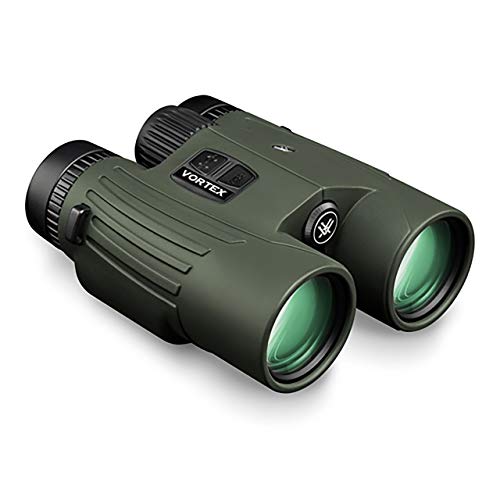 Vortex Fury HD 5000 10x42 Laser Rangefinding Binoculars Vortex Fury HD 5000 10x42 Laser Rangefinding Binoculars | $979.00 | 10x | 42 mm | Yes | 5,000 yd |
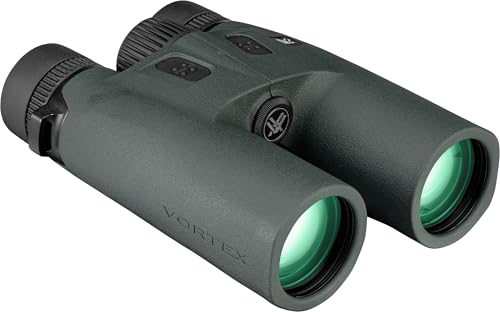 Vortex Ranger HD 3000 10x42 Laser Rangefinding Binoculars Vortex Ranger HD 3000 10x42 Laser Rangefinding Binoculars | $799.00 | 10x | 42 mm | Yes | 3,000 yd |
 Leupold BX-4 Range HD TBR/W 10x42 Rangefinding Binocular Leupold BX-4 Range HD TBR/W 10x42 Rangefinding Binocular | $1,081.07 | 10x | 42 mm | Yes | - |
A dash means the manufacturer does not publish that figure. We leave it blank rather than estimating it.
Buying the pieces separately, a cheaper combined unit, and a genuine step up
Pairing a Vortex Diamondback HD 10x42 Binoculars with a Vortex Crossfire HD 1400 Laser Rangefinder costs roughly $240.00 plus $196.88, well under half the Fury's price, and gives you genuine redundancy: a damaged rangefinder still leaves you with a working binocular. The trade is exactly the workflow cost described above, re-finding the animal between the two devices. The Vortex Ranger HD 3000 10x42 Laser Rangefinding Binoculars is Vortex's own cheaper combined unit with a shorter published maximum range, worth considering if the full 5,000 yard reflective-target figure was never going to matter on your hunting ground. For a genuine step up, the Leupold BX-4 Range HD TBR/W 10x42 Rangefinding Binocular moves to Leupold's own ballistic-range electronics and glass at a meaningfully higher price.
How we chose
We did not test these optics in person and we never claim to. Picks are researched from manufacturer specification sheets, published optical and ballistic formulas, and the recurring themes in verified owner reviews. Every pick is matched to a real objective diameter, a real tube size, a real ring height or a real exit pupil rather than to a price bracket, and it is placed in the tier where its capability actually belongs. Where a figure is shooter convention rather than a sourced number we label it, and where a manufacturer does not publish a figure we leave it out instead of estimating it.
Sources
- Vortex Optics published specifications for the Fury HD 5000 10x42 rangefinding binocular
- Owner-review consensus from verified purchaser reviews on major retail listings
Frequently asked questions
Is the Vortex Fury HD 5000 worth the price over separate instruments?
Only if the workflow of ranging without lowering the binocular is worth the premium and the loss of redundancy to you. On pure cost, a plain 10x42 binocular and a separate rangefinder together run well under half the Fury's price. Owner-review consensus favours the Fury for fast-moving shot opportunities and favours separate instruments for anyone who wants a backup if one piece fails.
What exit pupil does the Fury HD 5000 give?
4.2 mm at 10x, identical to any plain 10x42 binocular, computed as the 42 mm objective divided by 10x magnification. The laser rangefinder built into the right barrel does not change the optical path or the brightness of either side of the binocular.
How far can the Vortex Fury HD 5000 actually range an animal?
Vortex publishes 5,000 yards on a large reflective target, which is not a game-ranging figure. A soft, non-reflective animal in ordinary light will read considerably shorter than that headline number, commonly a third to a half of the maximum, which is normal laser rangefinder behaviour rather than a fault in this specific unit.
Does the Fury HD 5000 have angle compensation?
Yes, through its HCD mode, which returns a horizontal, angle-corrected distance rather than the raw line-of-sight range. An LOS mode is also available for a shooter who wants to apply their own angle correction. Angle compensation matters more to a hunting shot than maximum range does, because an uncorrected steep-angle range makes you shoot high.
What happens if the rangefinder inside the Fury HD 5000 fails?
You lose both the binocular and the rangefinder function, because the two share one housing and one optical path, unlike carrying a separate binocular and rangefinder where a failure in one leaves the other working. This shared-failure risk is the direct trade for the workflow convenience of ranging without lowering the glass.
Is the Fury HD 5000 heavier than a plain binocular?
Yes. Housing a laser emitter, receiver and processing electronics inside the same barrels as the binocular glass adds weight over a plain 10x42 of similar build, which is noticeable on a harness over a full day of glassing rather than in a quick handling comparison at a counter.
Researched, not professional advice. This page is compiled from published manufacturer specifications, published optical and ballistic formulas, and owner-review consensus, not hands-on testing. Figures described as a rule of thumb are shooter convention rather than sourced numbers, and they are labelled that way wherever they appear. Ballistic figures come from a point mass model using the ballistic coefficient the maker publishes, so treat them as a starting point and confirm them on paper at a measured distance. Confirm your firearm is unloaded with the action open before you mount, level, torque or bore sight anything. Verify a zero only on a supervised range or a safe, legal backstop, know what lies beyond your target, and follow the law where you hunt and shoot, including rules on land access and permitted cartridges.