Scope mounting kits
Best Scope Mounting Kits
Quick answer
The buy-once pick is the Wheeler Scope Mounting Combo Kit with FAT Wrench, Alignment and Lapping Bars at $129.99, because it combines alignment bars, a lapping kit, and a torque wrench in one purchase, covering all three steps a proper mount actually needs rather than just one of them.
A scope that will not hold zero is blamed on the scope, the ammunition, or the rifle far more often than it is traced back to the rings, and the rings are usually where the problem actually starts. A tube forced into rings that do not point at the same place is bent slightly out of true before a single shot is fired, and that preload shows up later as a scope that tracks differently dialing up than it does dialing down.
A mounting kit exists to catch this before the scope goes in permanently. Alignment bars show whether the two rings are pointed at the same place with no scope involved at all, using a straight bar that either passes through both rings cleanly or reveals exactly where they are off. Lapping then removes the high spots inside the rings so the tube is gripped evenly across its full contact surface rather than pinched at four points where the ring halves happen to meet.
These recommendations come from published manufacturer specifications and owner-review consensus. Nobody on this site mounted the same scope in every kit here to compare the result under recoil, and any product page implying that kind of controlled comparison for a mounting kit should be read with real skepticism.
On this page
What alignment bars actually check
An alignment bar is a straight rod, slightly under the tube's own diameter, that sits in the bottom halves of both rings before the scope ever goes near them. If the rings are pointed at exactly the same place, the bar passes through both cleanly with even clearance on every side. If the rings are off, even slightly, the bar binds or shows daylight unevenly on one side, and that gap is a direct picture of how far out of alignment the rings are before the scope's own tube has to absorb the difference.
This test costs nothing but time and happens before the scope is anywhere near the rifle, which is exactly the point. Once a real scope tube goes into misaligned rings, the tube itself flexes slightly to take up the gap, and that flex does not go away when the rings are tightened. It becomes a permanent, invisible preload on the erector system inside the scope.
Why lapping matters even when the rings look fine
A ring that grips a tube unevenly is doing the same thing to the scope's erector system that misaligned rings do, just through a different mechanism. Instead of a straight-line bend from one ring to the other, an unlapped ring pinches the tube at a small number of contact points, which can distort the tube by a barely measurable amount right where the erector assembly needs it to be perfectly round to track true.
This is the direct, physical explanation behind the symptom shooters describe as a scope that will not return to zero: dial ten clicks up, come back down ten clicks, and the point of impact has shifted slightly rather than returning exactly to where it started. The erector is binding against a subtly deformed tube wall rather than moving freely, and no amount of re-torquing rings that are already lapped correctly will fix a problem that was never in the torque to begin with.
The problem lapping solves
A ring bore that is not perfectly round grips a tube at a small number of high points rather than across its full contact surface. Lapping compound and an abrasive-coated bar wear those high points down until the ring contacts the tube evenly all the way around.
A ring can pass a visual and even a bar-fit check and still have this problem, because the high spots involved are often only a few thousandths of an inch, invisible to the eye and barely felt by hand.
Mounting kits compared
Kits in this catalog bundle different combinations of alignment bars, lapping tools, torque wrenches, and in one case a bore sighter. Buy based on what you already own, not just the price.
Kit contents in this catalog range from a single-purpose lapping-only set at $59.99 to the full combo at $226.65 that adds a laser bore sighter on top of alignment, lapping, and torque tools.
Sourced figure
| Kit | Alignment bars | Lapping | Torque wrench | Bore sighter | Price |
|---|---|---|---|---|---|
| Wheeler 1 inch Scope Mounting Kit with Manual F.A.T. Wrench and Alignment Bars | Yes | No | Manual | No | $65.99 |
| Wheeler Scope Mounting Combo Kit with FAT Wrench, Alignment and Lapping Bars | Yes | Yes | Manual | No | $129.99 |
| Wheeler Engineering Ultra Scope Mounting Kit with Laser Bore Sighter and Reticle Leveling System | Yes | Yes | Manual | Yes | $226.65 |
| Wheeler Scope Ring Alignment and Lapping Kit, 30mm | No | Yes, 30mm | No | No | $59.99 |
| Wheeler Scope Ring Alignment and Lapping Kit, 34mm | No | Yes, 34mm | No | No | $64.99 |
A standalone lapping kit is the right buy for someone who already owns alignment bars and a torque wrench but is mounting a larger tube diameter their existing kit does not cover.
How to lap a set of scope rings
- Confirm the rifle is unloaded. Open the action, check the chamber, and leave the action open for the entire process. Nothing about mounting a scope is worth doing on a loaded rifle.
- Mount the bases and rings loosely. Install the bases and ring bottoms, torqued only enough to hold position, not to final specification. Lapping needs the rings able to shift slightly.
- Check alignment with the bars first. Run the alignment bar through both ring bottoms before adding any lapping compound. If the bar reveals a gap on one side, correct the base or ring position before proceeding, since lapping cannot fix a straight-line misalignment.
- Apply the compound and work the bar. Coat the lapping bar with the supplied compound, lay it in the ring bottoms, and set the top halves in place without full torque. Rotate and slide the bar back and forth through both rings for even, moderate contact.
- Clean thoroughly and inspect. Remove every trace of compound from the rings before the scope goes anywhere near them, since any remaining grit will scratch the tube's finish. Look for a consistent, even contact band around the full bore of each ring.
- Install the scope and torque to specification. Set the scope in the lapped rings, level it, and torque the ring screws in a criss-cross pattern to the scope manufacturer's specification with a proper torque wrench, never by feel.
Beginner: alignment and torque, without lapping
This tier optimizes for the two cheapest steps that catch the most obvious mounting errors, accepting a standalone lapping purchase later if the symptoms of an uneven grip ever show up.

Wheeler 1 inch Scope Mounting Kit with Manual F.A.T. Wrench and Alignment Bars
$65.99Alignment bars and a manual torque wrench at the lowest price in this category, catching straight-line ring misalignment and inconsistent torque, the two most common beginner mistakes.
Best for: A first scope mount on a 1 inch tube, where the budget favors solving the biggest, most common errors first.
Check price on AmazonIntermediate: the full three-step process
This is the buy-once tier for anyone mounting more than one scope over the years, covering alignment, lapping, and torque in a single kit rather than three separate purchases.
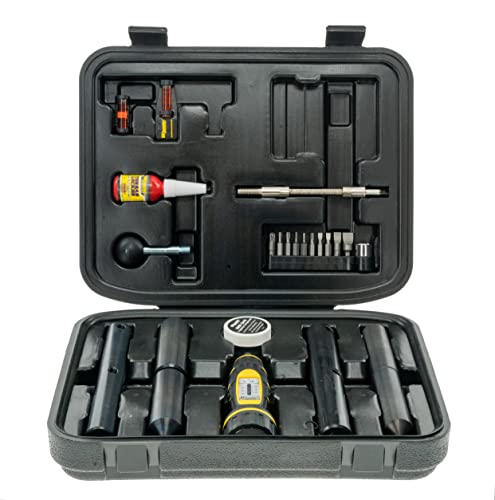
Wheeler Scope Mounting Combo Kit with FAT Wrench, Alignment and Lapping Bars
$129.99Alignment bars, a lapping kit, and a manual torque wrench together, solving the straight-line problem and the uneven-grip problem in the same purchase.
Best for: Anyone mounting scopes across more than one rifle who wants the complete process without buying the pieces separately.
Check price on Amazon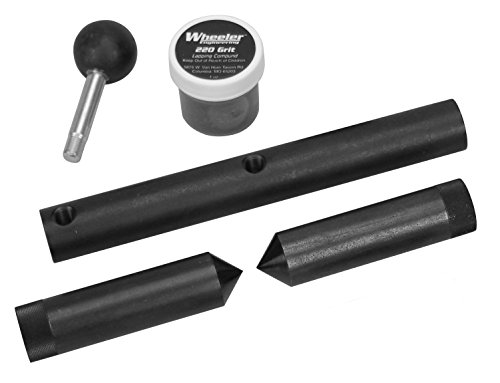
Wheeler Scope Ring Alignment and Lapping Kit, 34mm
$64.99A standalone lapping kit sized for a 34mm tube, for a buyer whose base combo kit does not cover the larger diameter of a newer precision scope.
Best for: Adding lapping capability for a 34mm tube scope without replacing an alignment and torque kit that already works fine.
Check price on AmazonExpert: the kit that also gets you on paper
This tier is for a shooter mounting scopes often enough that a bundled bore sighter pays for itself in saved range time and saved ammunition getting a fresh mount on paper.
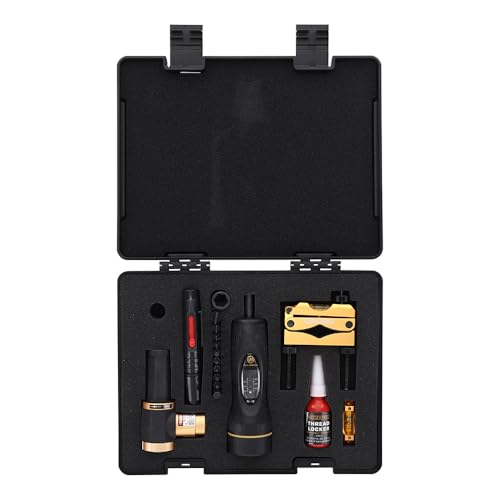
Wheeler Engineering Ultra Scope Mounting Kit with Laser Bore Sighter and Reticle Leveling System
$226.65The full alignment, lapping, and torque process plus a laser bore sighter in one kit, for a shooter who mounts scopes regularly enough that owning every tool at once is worth the price.
Best for: Someone who mounts and remounts scopes across several rifles a year and does not already own a separate bore sighter.
Check price on AmazonWho should not buy this tier: Not for someone who already owns a separate bore sighter. Paying extra for a bundled one you will not use is the wrong reason to move up from the base combo kit, and the standalone lapping kits above cover the same larger tube diameters for less money.
How we chose
We did not test these optics in person and we never claim to. Picks are researched from manufacturer specification sheets, published optical and ballistic formulas, and the recurring themes in verified owner reviews. Every pick is matched to a real objective diameter, a real tube size, a real ring height or a real exit pupil rather than to a price bracket, and it is placed in the tier where its capability actually belongs. Where a figure is shooter convention rather than a sourced number we label it, and where a manufacturer does not publish a figure we leave it out instead of estimating it.
Sources
- Wheeler Engineering published instructions and specifications
- Manufacturer torque specifications, as published per scope model
Frequently asked questions
What do scope ring alignment bars actually check?
Whether the two rings point at exactly the same place before the scope tube ever gets involved. A straight bar sits in both ring bottoms at once, and any binding or uneven gap shows precisely how far out of alignment the rings are, which is the straight-line problem lapping cannot fix on its own.
Why lap scope rings if they already look aligned?
Alignment and lapping fix two different problems. Alignment checks whether the rings point the same direction. Lapping removes the microscopic high spots inside each ring so the tube is gripped evenly across its full contact surface rather than pinched at a few points, which can distort the tube enough to affect tracking even in perfectly aligned rings.
What happens if I skip lapping?
Rings that grip a tube unevenly can preload the scope's erector system, producing a scope that shifts point of impact slightly when dialed up and back down rather than returning exactly to zero. This is one of the more common causes behind that specific symptom, and it is invisible from the outside once the scope is mounted.
Can lapping compound damage the scope tube?
Lapping compound is applied to the rings, not the scope, and the scope tube should never be present during the lapping step itself. The risk is leftover compound not fully cleaned from the rings before the real scope goes in, which can scratch the tube's finish. Clean thoroughly and inspect before mounting the actual scope.
Do I need different lapping bars for 30mm and 34mm tubes?
Yes. A lapping bar has to match the ring's bore diameter closely enough to make even contact, so a 30mm kit and a 34mm kit are different, non-interchangeable tools. Check the tube diameter of the scope you are mounting before buying a standalone lapping kit rather than assuming one size fits both.
Is a mounting kit worth it over just mounting a scope by eye?
For a one-time mount on a budget rifle, a careful eye and a level can produce an acceptable result. For any scope you expect to hold zero reliably over years of use and recoil, alignment bars and lapping catch problems that are invisible by eye and only show up later as unpredictable tracking, which is a far more expensive problem to diagnose after the fact.
Researched, not professional advice. This page is compiled from published manufacturer specifications, published optical and ballistic formulas, and owner-review consensus, not hands-on testing. Figures described as a rule of thumb are shooter convention rather than sourced numbers, and they are labelled that way wherever they appear. Ballistic figures come from a point mass model using the ballistic coefficient the maker publishes, so treat them as a starting point and confirm them on paper at a measured distance. Confirm your firearm is unloaded with the action open before you mount, level, torque or bore sight anything. Verify a zero only on a supervised range or a safe, legal backstop, know what lies beyond your target, and follow the law where you hunt and shoot, including rules on land access and permitted cartridges.