Laser rangefinders
Leupold RX-1400i TBR/W Gen 2 Review
Quick answer
The Leupold RX-1400i TBR/W Gen 2 Rangefinder with Flightpath is a laser rangefinder priced at $199.99 with True Ballistic Range and Wind technology and a Flightpath display that draws the bullet arc over obstructions. Leupold publishes 1,400 yards on reflective targets and 1,200 yards on trees, and neither figure is a promise about a soft animal target.
Most rangefinders in this price band return one number: the distance to the target. The RX-1400i TBR/W Gen 2 returns a computed ballistically-adjusted range that already accounts for the shot angle, plus a Flightpath display that draws an arc showing whether the bullet's path clears an obstruction between you and the target, which is the clearest treatment of overhead branches or a fence wire at this price.
At $199.99 this unit competes directly with plainer rangefinders at a similar or even lower price, and the honest case for it rests entirely on whether the TBR/W computation and the Flightpath display are worth paying for over a unit that returns a raw or angle-corrected distance and leaves the rest to you.
This review is researched from Leupold published specifications and owner-review consensus on major retail listings, not from a hands-on field session, and distinguishes Leupold's own published figures from the general behaviour every laser rangefinder shares.
On this page
- What does True Ballistic Range and Wind actually compute?
- What does the published 1,400 yard figure actually mean?
- Is the Flightpath arc display actually useful, or a gimmick?
- Where the RX-1400i costs you: 1,400 yards is a reflective-target promise
- A budget alternative and a step-up instead of the RX-1400i
- The budget pick and the step up
What does True Ballistic Range and Wind actually compute?
A plain laser rangefinder returns a line-of-sight distance and, on better units, an angle-corrected horizontal distance. Leupold's TBR/W technology goes a step further and returns a ballistically calculated range, meaning the display already accounts for the bullet's drop over that specific distance and angle rather than leaving you to run drop separately after ranging. Leupold states the unit can also generate a hold point for a 10 mile per hour wind at a 90 degree angle out to 800 yards, which folds a wind estimate into the same reading.
The Flightpath feature adds a visual layer on top of that: a Selectable Bow mode shows potential obstructions along the bullet's or arrow's path and calculates an angle-compensated range around them, so a shooter looking through a gap in branches can see whether the trajectory actually clears what is between them and the target rather than guessing.
What does the published 1,400 yard figure actually mean?
Leupold publishes 1,400 yards on reflective objects and 1,200 yards on trees, which are the manufacturer's own two figures rather than a single headline number.
Sourced figure
| Target type | Published maximum range | What it tells you |
|---|---|---|
| Reflective object | 1,400 yd | The laboratory maximum, measured on a large, flat, retroreflective surface |
| Trees | 1,200 yd | A large, textured, non-reflective natural surface, published directly by Leupold |
| Soft, non-reflective game animal | Not separately published | Expect meaningfully shorter than the tree figure in ordinary field conditions |
Leupold is unusually transparent here by publishing two figures rather than one, and even the tree figure is optimistic for a soft, irregularly shaped, non-reflective animal at typical hunting distances and light.
Is the Flightpath arc display actually useful, or a gimmick?
Overhead obstruction is one of the most common reasons a shot that looked clear through a rangefinder or a scope is not actually clear along the bullet's real path, because the bullet's arc rises above the line of sight before falling back through it. A shooter aiming under a low branch that looks clear at the moment of aiming can still clip it partway to the target if the bullet's rise carries it into the branch. Flightpath addresses this directly by drawing the computed arc against what the rangefinder sees, which is a genuinely useful visual check rather than a marketing flourish, and it is unusual to find at this price.
The limitation is that the display shows Leupold's own computed trajectory model, which depends on the ballistic profile entered or assumed for your load. A shooter running an unusual bullet weight or a load well outside typical published trajectories should treat the Flightpath arc as a helpful visual reference rather than a certified clearance guarantee.
Where the RX-1400i costs you: 1,400 yards is a reflective-target promise
The honest weakness of this unit is shared with every laser rangefinder at any price: the 1,400 yard headline figure comes from a large reflective surface, and a soft, non-reflective animal in poor light will read at a fraction of that, commonly a third to a half of the published maximum. Leupold's own decision to publish a separate 1,200 yard tree figure alongside the 1,400 yard reflective figure is honest disclosure, and it is still not a game-ranging promise, because trees are larger and more textured than most animals.
The second real limitation is that the TBR/W ballistic computation and the Flightpath display both depend on an assumed or entered trajectory profile. They are a genuine convenience over a plain distance reading, not a substitute for confirming your own drop data at the range, and a shooter who never verifies the unit's assumptions against their actual rifle is trusting a computed number rather than a measured one.
A budget alternative and a step-up instead of the RX-1400i
One direction for a simpler unit at a similar price, and one direction for more published range and a brighter display.
| Model | Price | Maximum ranging distance | Angle compensation |
|---|---|---|---|
 Leupold RX-1400i TBR/W Gen 2 Rangefinder with Flightpath Leupold RX-1400i TBR/W Gen 2 Rangefinder with Flightpath | $199.99 | 1,400 yd | Yes |
 Vortex Crossfire HD 1400 Laser Rangefinder Vortex Crossfire HD 1400 Laser Rangefinder | $196.88 | 1,400 yd | Yes |
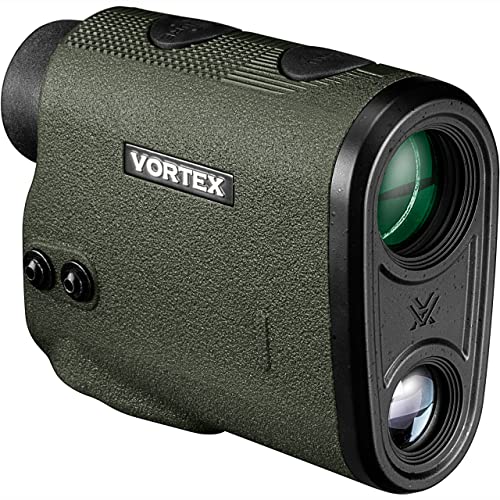 Vortex Diamondback HD 2000 Laser Rangefinder Vortex Diamondback HD 2000 Laser Rangefinder | $299.00 | 2,000 yd | Yes |
A dash means the manufacturer does not publish that figure. We leave it blank rather than estimating it.
The budget pick and the step up
The Vortex Crossfire HD 1400 Laser Rangefinder matches the RX-1400i's published 1,400 yard reflective range at a similar price, with angle compensation but without the TBR/W ballistic computation or the Flightpath display, which suits a shooter who would rather run their own drop chart than trust an onboard computation. The Vortex Diamondback HD 2000 Laser Rangefinder steps up to a published 2,000 yard reflective range and a brighter red OLED display for a higher price, trading Leupold's Flightpath feature for raw ranging distance.
How we chose
We did not test these optics in person and we never claim to. Picks are researched from manufacturer specification sheets, published optical and ballistic formulas, and the recurring themes in verified owner reviews. Every pick is matched to a real objective diameter, a real tube size, a real ring height or a real exit pupil rather than to a price bracket, and it is placed in the tier where its capability actually belongs. Where a figure is shooter convention rather than a sourced number we label it, and where a manufacturer does not publish a figure we leave it out instead of estimating it.
Sources
- Leupold published specifications for the RX-1400i TBR/W Gen 2 with Flightpath
- Owner-review consensus from verified purchaser reviews on major retail listings
Frequently asked questions
Is the Leupold RX-1400i TBR/W Gen 2 worth it?
Yes, for a shooter who values a computed ballistic range and the Flightpath obstruction display over a plain distance reading, based on published specifications and owner-review consensus. A shooter who already runs their own drop chart and only needs a raw or angle-corrected distance gets less added value from the extra computation.
How far can the Leupold RX-1400i actually range an animal?
Leupold publishes 1,400 yards on reflective objects and 1,200 yards on trees, and neither is a game-ranging figure. A soft, non-reflective animal in ordinary field light will read shorter than the tree figure, commonly a third to a half of the published maximum, which is normal laser rangefinder behaviour rather than a defect.
What does True Ballistic Range and Wind mean?
TBR/W is Leupold's onboard ballistic computation, which returns a range already adjusted for the shot angle and can generate a wind hold point for a 10 mile per hour crosswind out to 800 yards. It converts a raw laser distance into a usable firing solution rather than leaving the ballistic math to the shooter.
What does the Flightpath feature actually show?
A visual arc of the computed bullet or arrow path, so a shooter can see whether an obstruction between them and the target, such as a low branch, actually intersects the trajectory. It uses Leupold's computed ballistic model, so it is a helpful visual reference rather than a certified guarantee for an unusual load.
Does the RX-1400i have angle compensation?
Yes, built into its TBR/W ballistic computation, which is a more complete treatment than a simple angle-corrected distance because it also folds in the bullet's drop over that angle and distance. This matters more for the accuracy of a hunting shot than the unit's maximum published range does.
How does the RX-1400i compare to a plainer rangefinder at a similar price?
It adds the TBR/W ballistic computation and the Flightpath obstruction display for roughly the same money as a plain angle-compensated rangefinder like the Vortex Crossfire HD 1400. The trade is complexity for convenience: a plainer unit gives you a distance and lets you run your own numbers, while the RX-1400i runs them for you.
Researched, not professional advice. This page is compiled from published manufacturer specifications, published optical and ballistic formulas, and owner-review consensus, not hands-on testing. Figures described as a rule of thumb are shooter convention rather than sourced numbers, and they are labelled that way wherever they appear. Ballistic figures come from a point mass model using the ballistic coefficient the maker publishes, so treat them as a starting point and confirm them on paper at a measured distance. Confirm your firearm is unloaded with the action open before you mount, level, torque or bore sight anything. Verify a zero only on a supervised range or a safe, legal backstop, know what lies beyond your target, and follow the law where you hunt and shoot, including rules on land access and permitted cartridges.